
Transparent Soap Making Plant Manufacturer in India
- Home
- Transparent Soap Making Plant
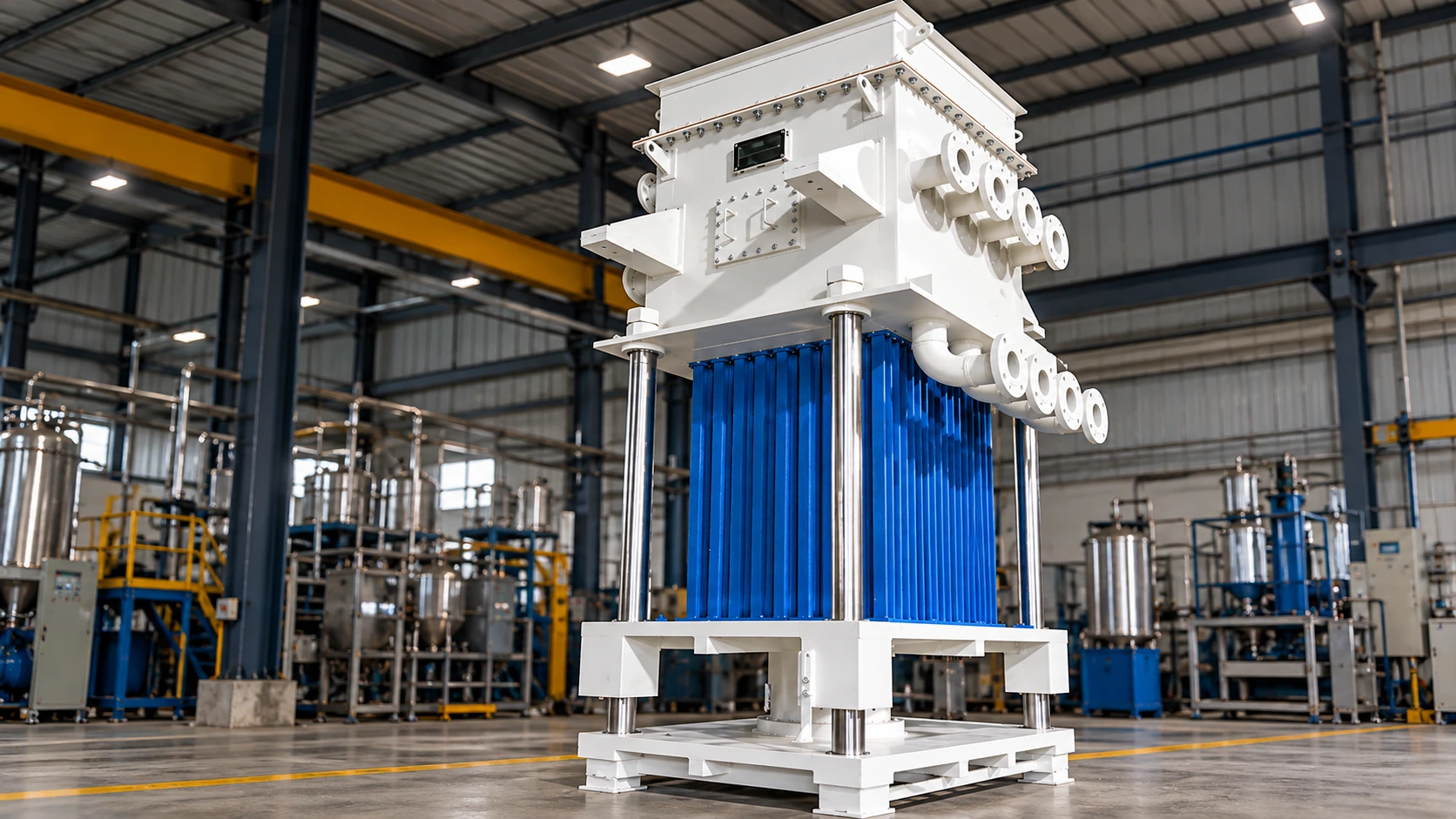
Complete Glycerin Soap Production Line from Radical Engineering
Choosing a transparent soap making plant manufacturer in India is a big decision, because transparent soap is unforgiving. A slightly cloudy batch, a bar that sweats in summer, or a surface that cracks after two weeks on the shelf can hurt a brand before it has had a chance to grow.
That is why the plant matters as much as the formula. Radical Engineering, part of the Rameshwar Steel Fab (RSF) group, designs and builds complete transparent and glycerin soap making plants for new brands and established soap manufacturers. This guide explains how the plant works, which machines make up the line, and what to check before you invest.
Request a QuotationAbout Radical Engineering and the RSF Group
The RSF group has built soap and detergent plant machinery for 41 years and supplies it across India and to export markets. Over that time the group has grown into three brands, each serving a different plant type and scale. Radical Engineering focuses on [add your exact focus, e.g. compact to mid-scale soap and cosmetic processing lines].
Our machines are fabricated in-house at [plant location], so material quality, welding, finishing and testing stay under our own supervision from the first sheet of steel to the final dispatch check.
Transparent Soap vs Glycerin Soap: What Is the Difference?
The two terms are often used as if they mean the same thing, so here is the practical difference.
Transparent soap is made so that light passes through the bar. This is usually achieved by dissolving the soap base with solvents and humectants such as glycerin, sugar solution or propylene glycol, which keeps the crystal structure fine.
Glycerin soap contains a high proportion of glycerin. It is commonly transparent as well, and buyers like it because it feels gentle and moisturising.
In the market, most clear bars are sold as glycerin soap, and the machinery for both is largely the same. A single plant can usually produce both, with small changes to the recipe and the moulds. If you are planning opaque toilet soap instead, see our Bath Soap Manufacturing Plant.
How a Transparent Soap Making Plant Works: Stage by Stage
A standard line moves the material through six stages. The sequence below follows the layout drawing at the top of this page.
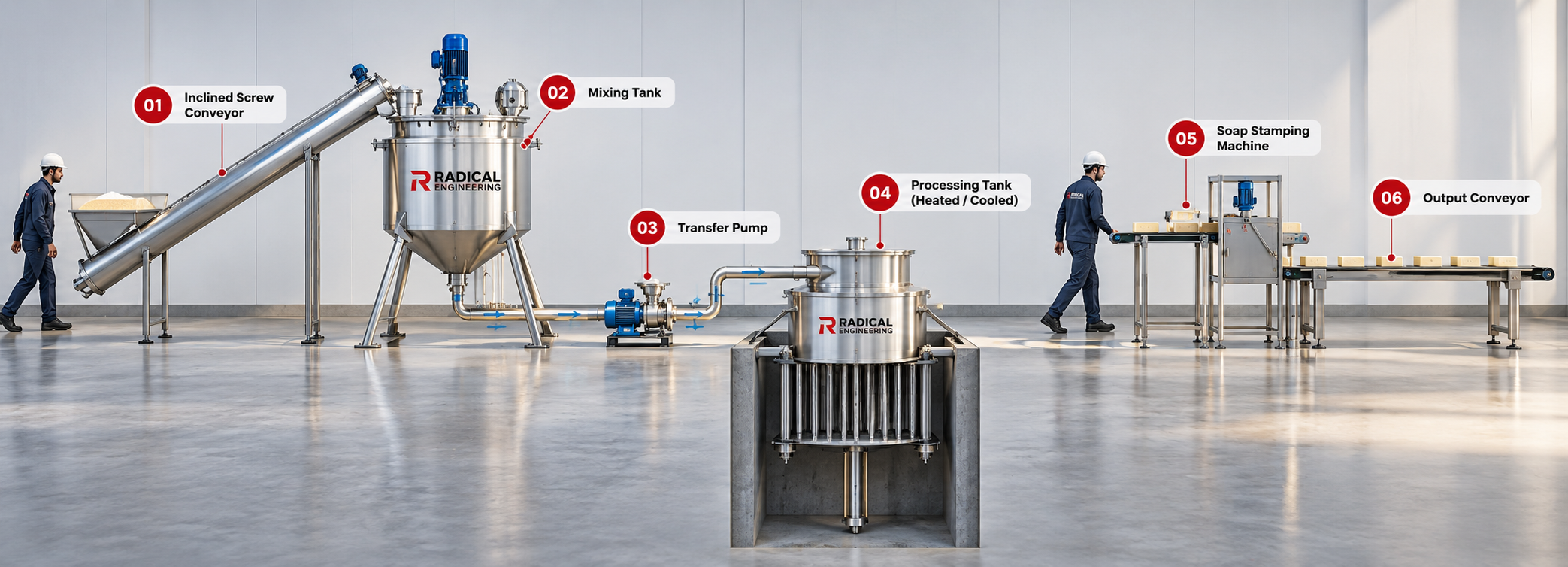
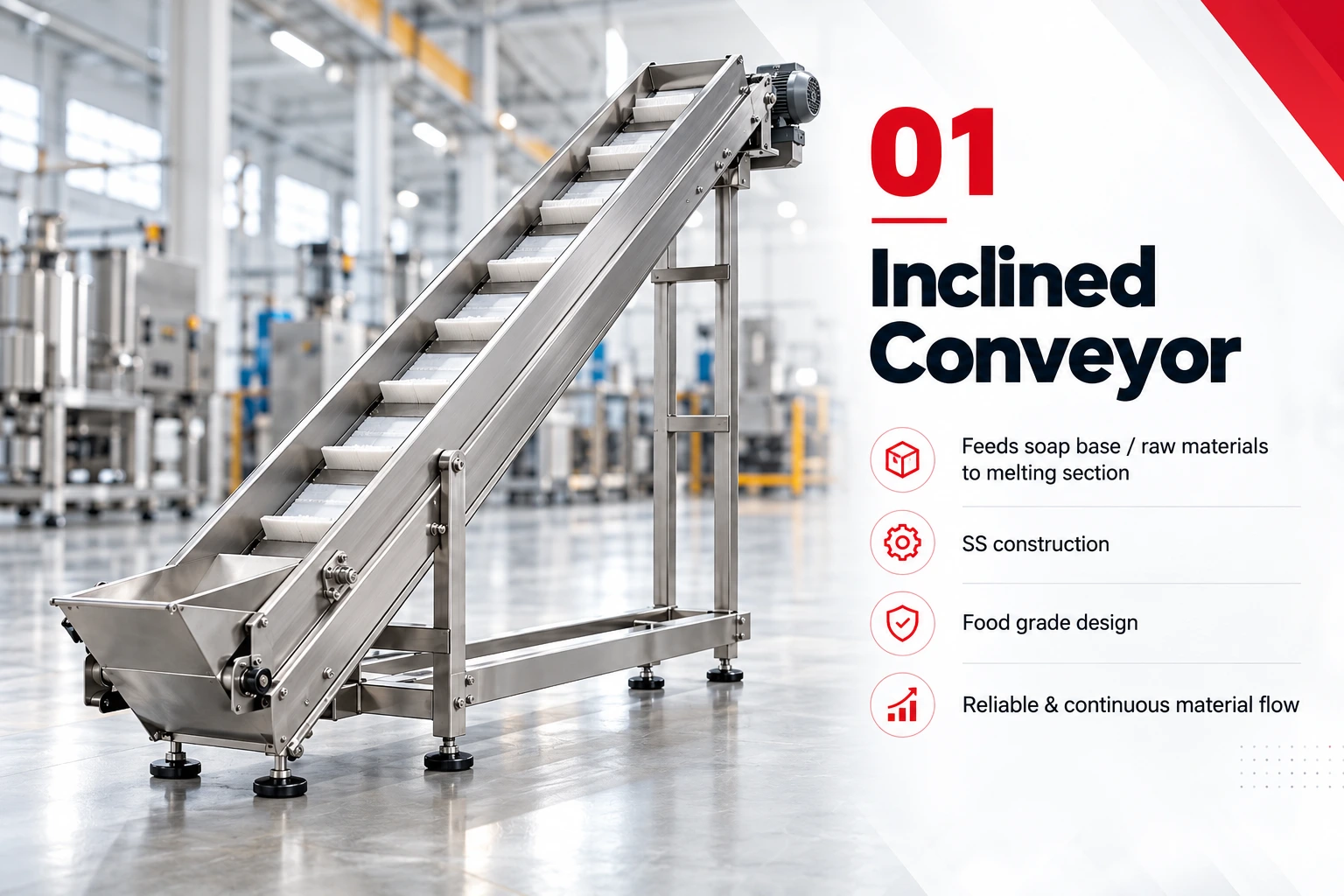
Stage 1: Raw Material Feeding
Soap base or raw material goes into a hopper and is carried up an inclined conveyor into the processing vessel. This removes manual lifting, saves labour and keeps feeding steady from batch to batch.
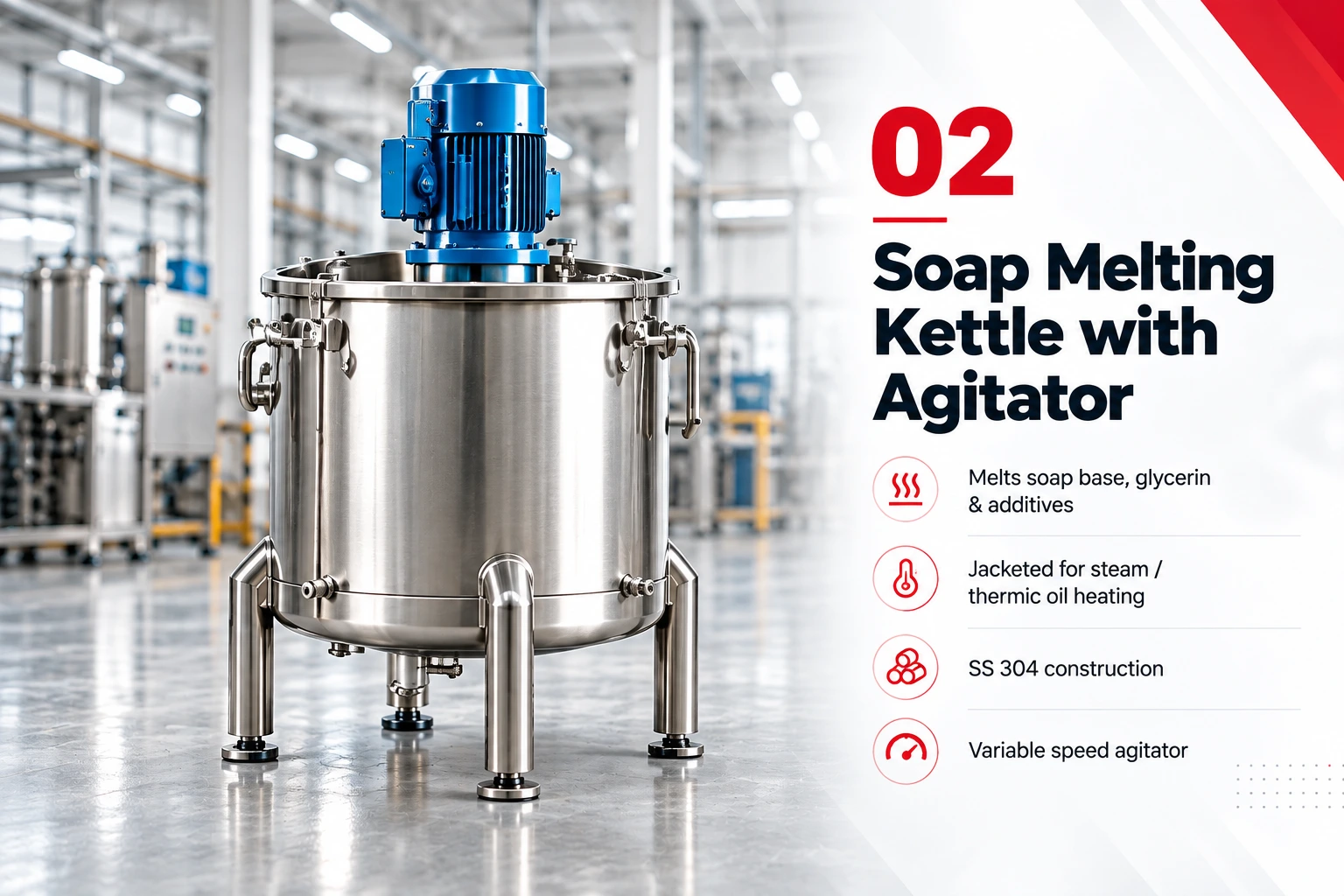
Stage 2: Jacketed Mixing and Melting Vessel
This is the heart of the plant. The jacket heats the material evenly with steam or hot water, so nothing scorches. A motor-driven agitator keeps the mixture moving while glycerin, sugar solution, colour and fragrance are blended in. The conical bottom lets the batch drain out completely, which keeps wastage low.
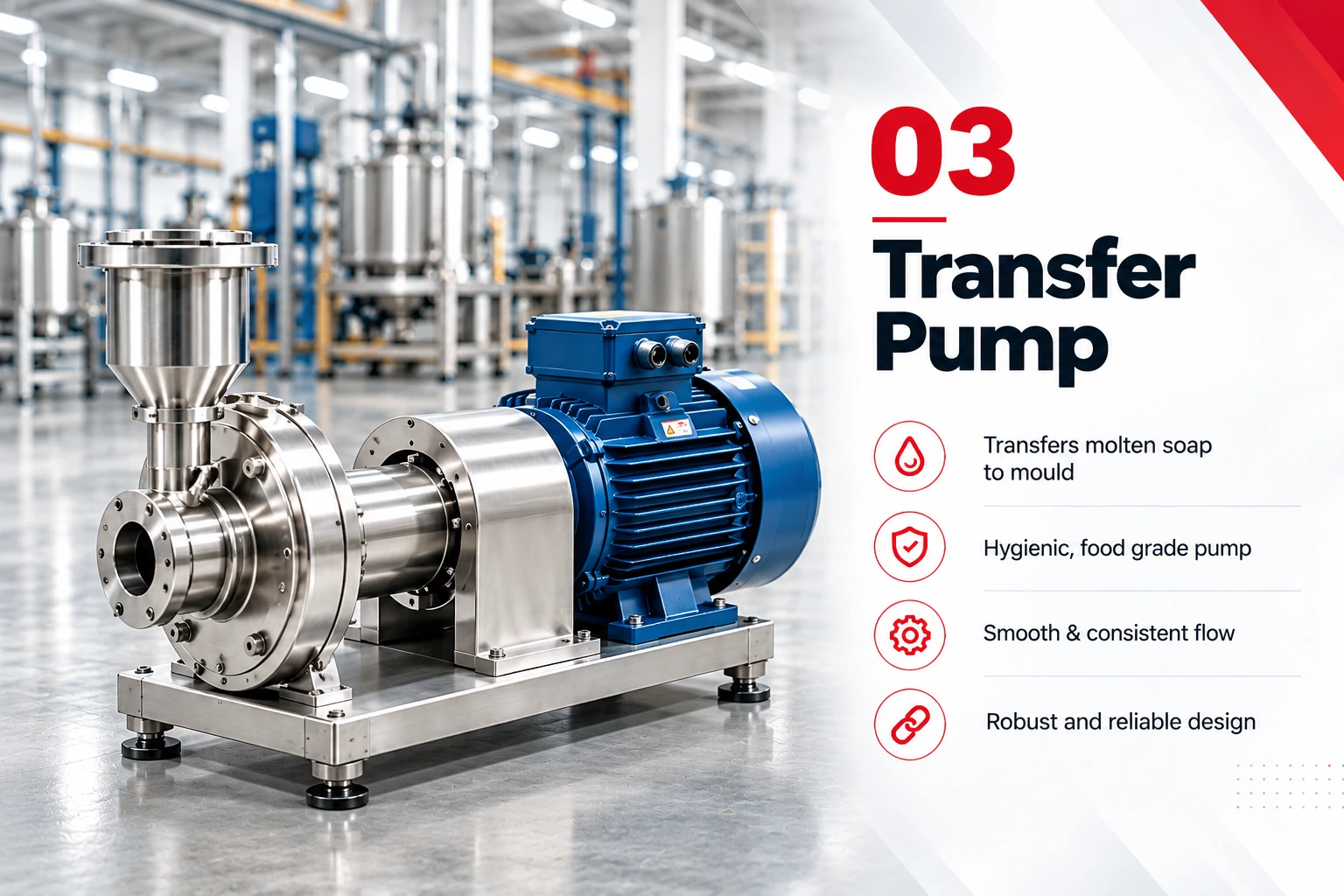
Stage 3: Transfer Pump
Once the batch is ready, a pump moves it forward in a controlled flow. Pump choice matters here, because air drawn in at this step shows up later as cloudy spots or bubbles in the finished bar.
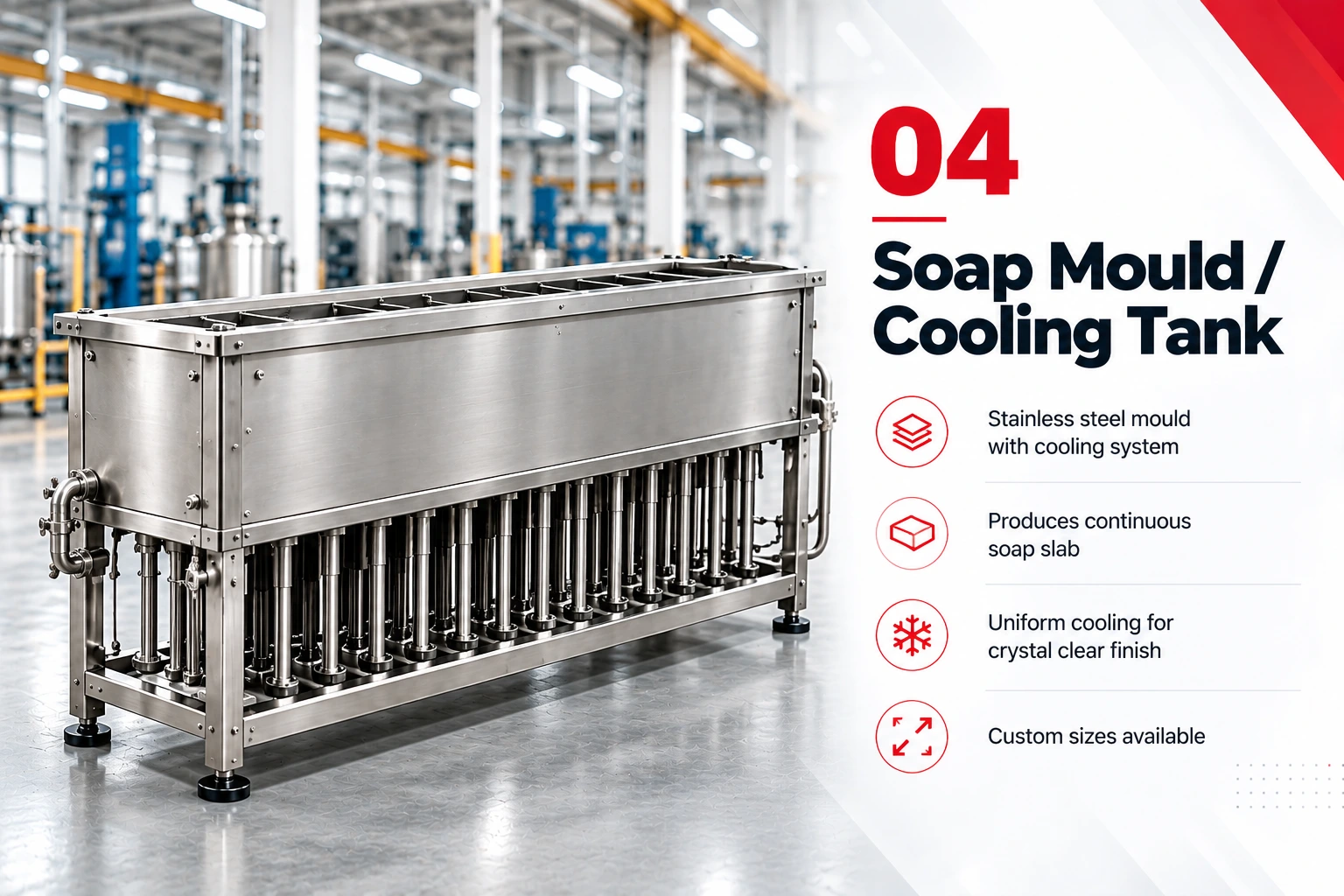
Stage 4: Schicht cooler
Clarity depends on removing fine impurities. This unit treats the material before forming, and it is where much of the difference between a clear bar and a truly transparent bar is decided.
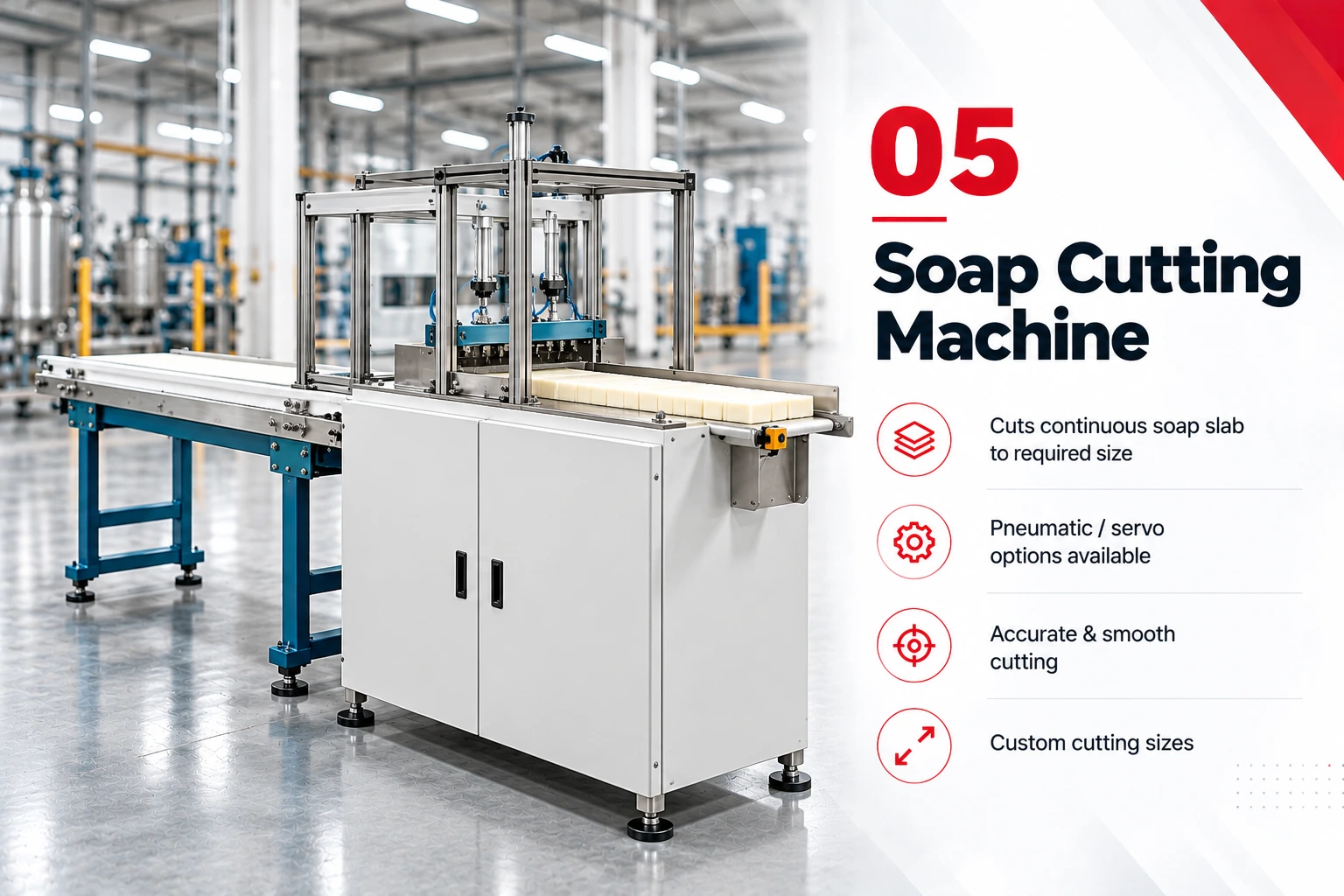
Stage 5: Glycerin Soap Cutting
The processed material travels along a conveyor to the forming station, where it is shaped into bars of uniform thickness.
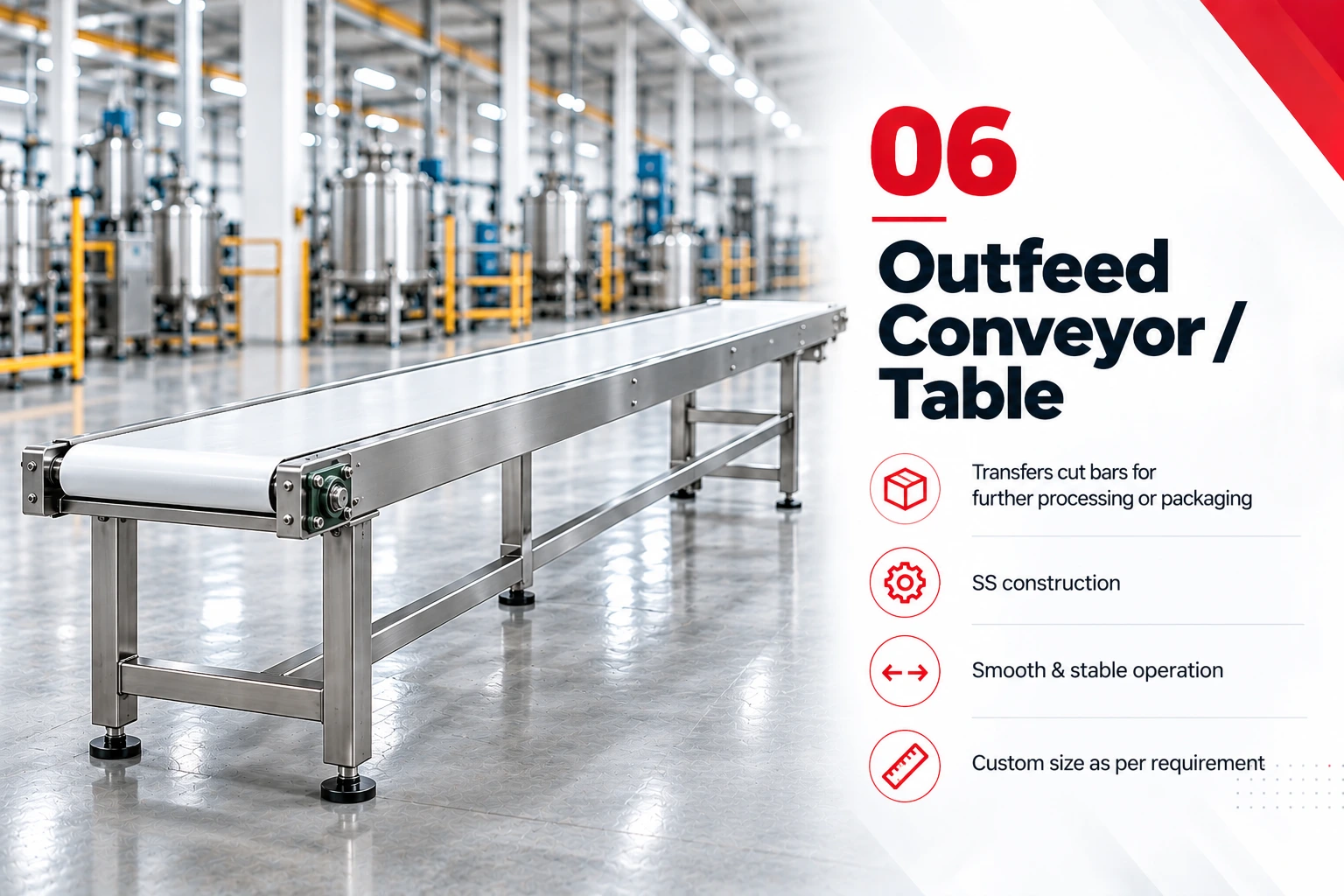
Stage 6: Outfeed Conveyor table
A pneumatic press stamps or cuts each bar and applies the brand impression. The finished soap then moves on the discharge conveyor to wrapping and packing. Depending on your product, the line can be extended with cooling tunnels, moulds, wrapping machines and packing tables.
Machines in a Complete Glycerin Soap Production Line
Plant Capacity Options
We build lines to match where your business is today and where you plan to be in two or three years.
- Small scale: [100kg/hour]. Suited to new brands and local markets.
- Medium scale: [300 kg/hour]. Suited to regional distribution.
- Large scale: [500 to 2 Ton kg/hour]. Suited to high-volume production.
Not sure which one fits? Tell us your target monthly output and we will suggest a layout that can be expanded later without rebuilding the whole line.
Build Quality You Can Check
- Stainless steel contact parts (SS 304 or SS 316 as required) for hygiene and corrosion resistance
- Even heating through a properly designed jacket
- Easy cleaning, so colour and fragrance changeovers are quick
- Electrical and pneumatic components from recognised brands for dependable service
- Trial and inspection before every dispatch
Is a Transparent Soap Plant Right for Your Business?
It suits you if you are launching a premium or herbal bath soap, adding a glycerin variant to an existing range, or moving from contract manufacturing to your own unit. Transparent soap usually sells at a higher price than opaque soap, but it needs tighter process control, so the quality of the machinery counts for more than it does with a basic soap line.
What to Check Before Buying a Soap Making Plant
- See a working demonstration. A reliable manufacturer will not hesitate to arrange one.
- Ask about the material of construction for every part that touches the product.
- Confirm heating and temperature control. Uneven heat is the most common cause of cloudy soap.
- Check after-sales support: spare parts, installation help and operator training.
- Ask about experience with your product, not just soap in general.
Turnkey Support from Radical Engineering
We do more than supply machines. Our turnkey service covers plant layout planning, machinery manufacturing, installation and commissioning, operator training, and guidance on process and formulation for your product. One team stays responsible from the first drawing to the first finished bar.
Frequently Asked Questions
What is the cost of a transparent soap making plant in India?
The cost depends on capacity, level of automation and the number of stages in the line. Share your target output with us and we will send a detailed quotation.
Can one plant make both transparent and glycerin soap?
Yes. The core machinery is the same. The changes are mainly in the recipe and the moulds.
How much space does the plant need?
It depends on the capacity. We provide a layout drawing with the quotation so you can plan your floor area in advance.
Do you provide installation and operator training?
Yes. Our team supports installation, commissioning and operator training.
Do you supply across India?
Yes. We deliver across India and also handle export enquiries through the RSF group.
Talk to Our Engineers
Planning a transparent or glycerin soap unit? Speak to our team before you finalise anything. A short call can save you months of work and a lot of money.
Radical Engineering
8 Shayona Vatva GIDC Ahmedabad India
Phone: 97256 05639 | sales@radicalengitech.com